Boxing? Really? You may be wondering what punching air has to do with Parkinson’s. Hear us out. This is not about stepping into a ring with a heavyweight champ. It is about stepping into your power.
Non-contact boxing is rapidly becoming one of the most popular and effective exercise methods for people living with Parkinson’s disease. And no, you do not have to be Rocky Balboa to reap the benefits.
Parkinson’s vs. Movement: The Real Fight
Parkinson’s affects coordination, balance, posture, and motor control. Boxing workouts challenge all of those, and in doing so, they help improve them.
Each jab, cross, and hook is a mini-therapy session for your nervous system.
Science-Backed Benefits of Boxing for Parkinson’s
Boxing combines aerobic exercise, strength training, coordination drills, and agility work. That is a powerhouse combination.
Here is what the science and real-life results are saying:
- Improved balance and gait
- Enhanced reaction time
- Better hand-eye coordination
- Increased strength and endurance
- Reduced freezing episodes
- Mood boost and mental sharpness
What a Typical Boxing Class Looks Like
These classes are nothing like a typical gym boxing class. Parkinson’s-focused boxing is safe, structured, and designed for your needs.
Expect:
- Warm-ups with stretching and breath work
- Shadowboxing with guided combos
- Footwork drills to improve agility
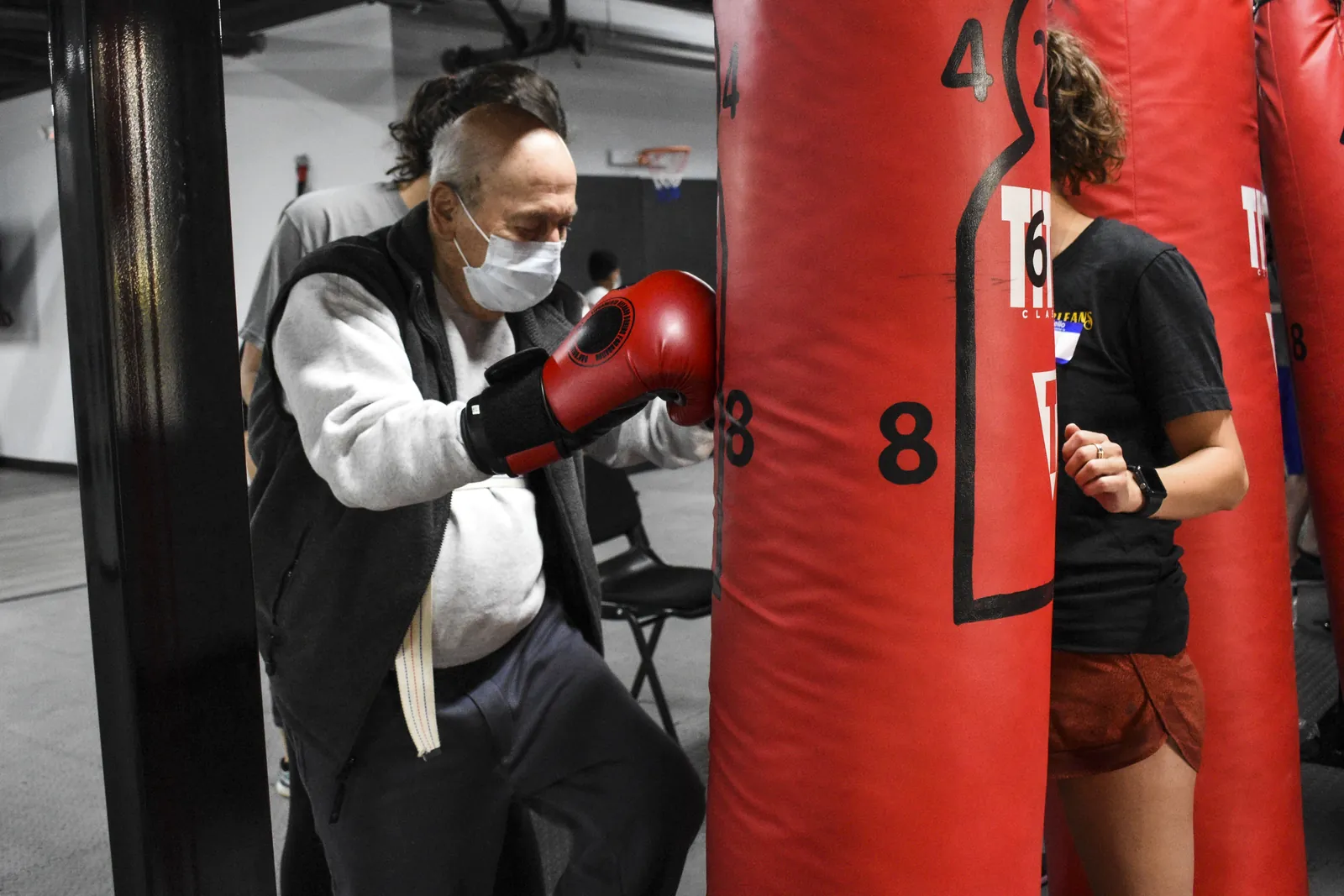
- Bag work (optional and non-contact)
- Cool-down with balance-focused exercises
And yes, it is a workout. You will probably sweat, and you might even laugh.
Why It Works So Well
Boxing means doing several things at once: moving your feet, throwing a punch, and listening to cues. This helps fire up your brain and improve motor planning.
It is like brain training disguised as exercise.
Real People, Real Results
Many Parkinson’s patients report noticeable improvements in posture, stability, and energy after just a few weeks of boxing.
They also feel empowered. Punching air (or a bag) can be surprisingly therapeutic.
Who Can Do It?
Almost anyone. Classes are adapted to all mobility levels. Whether you are standing or sitting, using a walker, or just getting started with exercise, boxing can be changed to fit you.
Always check with your doctor first, and work with certified trainers who specialize in Parkinson’s programs.
Bonus: Community Connection
Boxing classes often create strong social bonds. You are not just working out. You are joining a team of fighters who understand the journey.
And having fun along the way? That is a side effect we can all get behind.
Final Thoughts
Boxing for Parkinson’s may sound unconventional, but it is one of the most exciting, engaging ways to fight back against the symptoms.
So throw on some gloves (real or imaginary), find a class near you, and step into the ring. You are not just exercising. You are winning rounds in the fight for your wellness.
Gloves up. Let’s do this.